Where are they now? Inside the Life of a Senior Trade Commissioner in New York City
Where are they now? is a series that covers YDC alumni journeys — their career paths, their time as a YDC delegate, and how these experiences shaped their professional and personal lives.

Our Alumni Engagement team recently sat down with Aaron Joshua Pinto, former delegate to the 2018 G7 Youth Summit (Y7), to reflect on his career since his time with Young Diplomats of Canada (YDC), his approach to diplomacy, and his advice for young professionals entering the field of international relations.
Born in Bahrain to a family of Indian heritage and raised in Canada, Aaron grew up attuned to difference. He was fascinated by the subtleties of diverse accents and customs, and by the ways people from different backgrounds could approach the same problem in entirely different ways. That curiosity deepened as he watched the news with his father, who would “translate” global events country by country, explaining what was happening and why. Aaron was struck not only by the diversity of perspectives but also by the similarities that connected people across borders. Diplomacy, for him, is simply the grown-up version of those childhood fascinations.
Beyond the internship rat race
Guided by curiosity, Aaron’s studies and career have taken him around the world; from the townships of Malawi to election observation in Ukraine, and from trade promotion in Colombia and Panama to public service back home in Canada. He has served as a city youth councillor in Mississauga and as a Youth Ambassador for Canada at the Organization for Security and Co-operation in Europe (OSCE), among other roles.
Aaron studied International Relations at Western University, completing exchanges in France and the Netherlands, an internship in Russia, one with the U.S. Consulate in Toronto, and another on Parliament Hill. Rather than continuing what he describes as the “internship rat race,” he chose an unbeaten path: pursuing a Master’s degree at the OSCE Academy in Bishkek, Kyrgyzstan. Applying to something unexpected, he says, can open your world. He ended up receiving a full scholarship and stipend for the program, graduating cum laude, and won best thesis. This experience pushed him well outside his comfort zone and connected him with peers who shared similar global ambitions.
“There are infinite pathways into a career in international relations.”
For Aaron, the key has been simple but powerful: take unique opportunities when they arise and avoid feeling locked into a single plan. There are infinite pathways into a career in international relations. Choosing unconventional routes not only diversifies your knowledge and expands your horizons but also helps you stand out in a competitive job market.
A day in the life of a Trade Commissioner in New York City


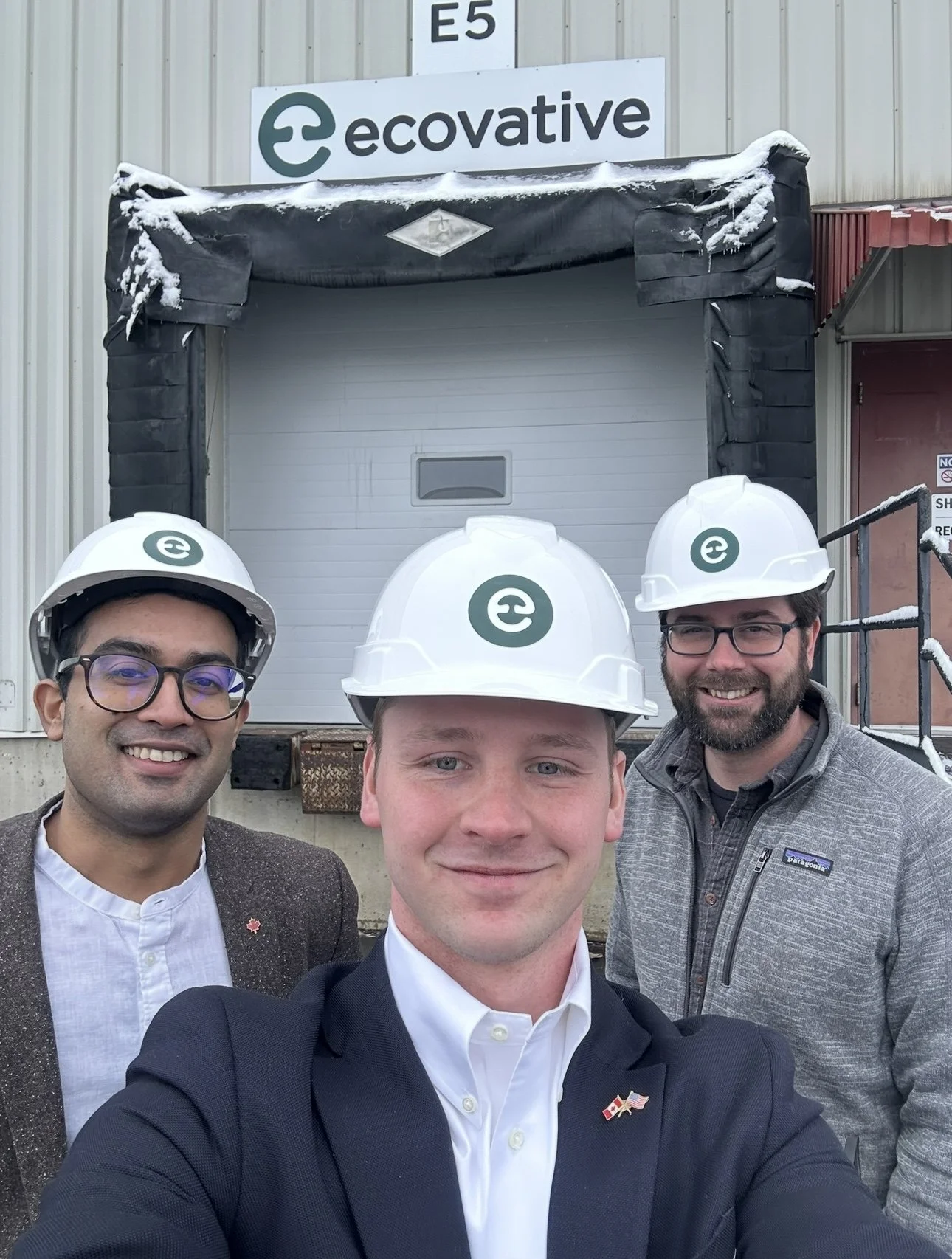
Today, Aaron serves as Senior Trade Commissioner for the Government of Ontario, covering the northeastern United States. His office is co-located at the Canadian Consulate in New York City. His work sits at the intersection of policy and business, a form of commercial diplomacy focused on strengthening cross-border ties between Ontario and the U.S.
His role has two core components. First, he supports Ontario-based small and medium-sized enterprises in expanding into the U.S. market. This includes supporting targeted trade missions in cities such as New York and Boston, and helping companies grow their market share south of the border in key sectors. He also engages major U.S. corporations to directly connect them with Ontario companies that can offer solutions to specific challenges they face. In doing so, he plants the seeds for partnerships that create jobs back home while expanding Ontario’s footprint in the U.S. market.
Second, he leads efforts to attract foreign direct investment, pitching Ontario as a destination for U.S. companies looking to grow and set up shop internationally. This involves connecting investors with law firms, universities, industry associations, talent pipelines, and coordinating site visits to ensure a smooth landing in the province.
“While federal-level disagreements may dominate headlines, state-to-province relationships remain key and active.”
For Aaron, workday mornings are often dedicated to synthesizing information, responding to clients, scanning the news, and conducting outreach. Afternoons are filled with meetings, site visits, and investor engagement, while evenings often mean events, receptions, and networking. During the past six months alone, he and his team have helped lead six sub-national ministerial visits on files ranging from clean energy to critical minerals. In a period of heightened cross-border tensions, he notes that while federal-level disagreements may dominate headlines, state-to-province relationships remain key and active. Trade continues to be a major driver of both economies.
What motivates him most about his job is “creating something out of nothing” — turning policy ideas into tangible outcomes. Whether it’s renewing province–state agreements, convening executives in Boston who once studied in Ontario, or advancing cooperation in nuclear energy between Ontario and New York State, he finds value in making diplomacy concrete. When contracts are signed, jobs are created, and investments materialize, the often-invisible work of diplomacy becomes real.
“Compressed Diplomacy”: Lessons from Y7
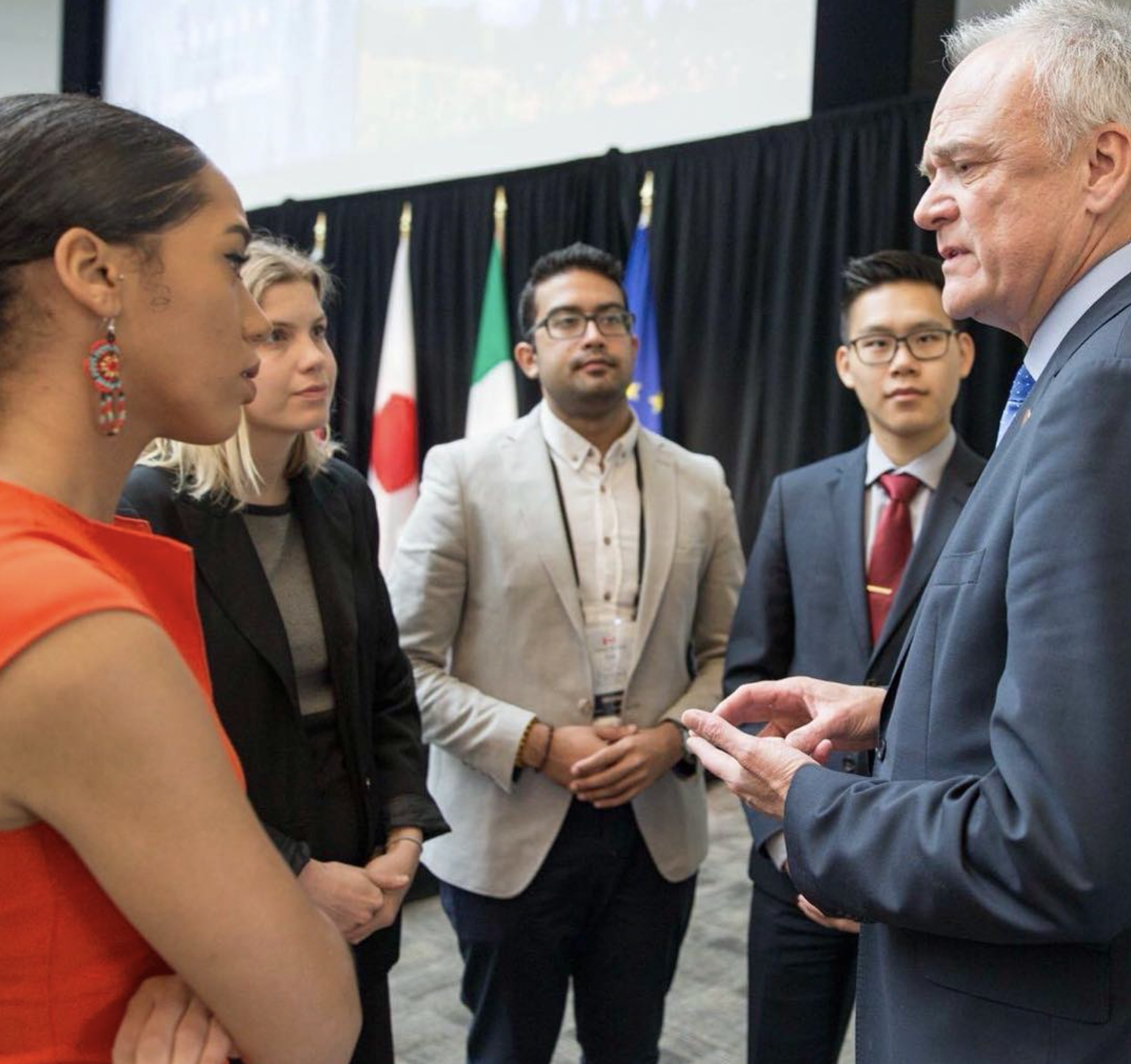
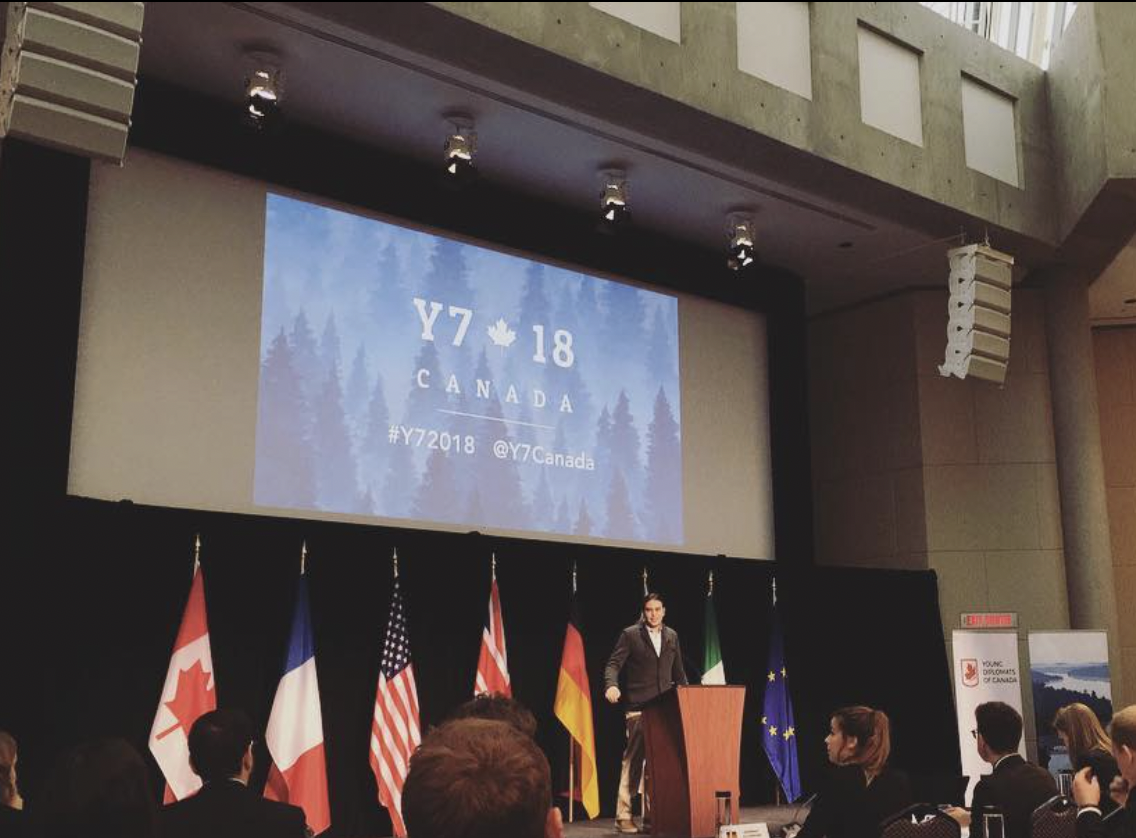
Looking back on his time as a YDC delegate at the G7 Youth Summit (Y7) in 2018, Aaron describes his experience as “compressed diplomacy.” Representing Canada in 2018, he was challenged to translate complex issues into accessible messages, build coalitions across differing worldviews, draft policy under tight deadlines, and conduct stakeholder outreach. These are all skills he now uses daily when briefing ministers, meeting investors, and engaging business leaders.
Stakeholder outreach, in particular, remains central to his work. During the Y7, he met with ministers and the G7 Sherpa, learning the importance of understanding an interlocutor’s priorities and identifying points of overlap. Research, preparation, and empathy are essential: what does the other side want, and where do our interests align? That same mindset now guides his engagement when meeting with companies and investors.
Aaron’s Y7 experience also offered a behind-the-scenes look at international negotiations. In 2018, amid differing views on climate change, particularly with a new U.S. Administration, he saw firsthand how countries could overcome areas of contention by focusing on actionable common ground, for example, framing discussions around ocean health rather than getting caught up in broader, oft-politicized climate debates. From public speaking to negotiation and delivering under time pressure, Y7 provided exposure to the full spectrum of soft skills that underpin effective diplomacy.
Advice for young diplomats in Canada
Aaron encourages young professionals to be skeptical of big narratives. Grand ideas and sweeping geopolitical storylines can be exciting, but they can also drown out smaller, more actionable areas where meaningful change is possible. Even in moments of major Canada–U.S. tensions, for example, there may still be room to simplify customs procedures or advance a targeted policy file. He advises surrounding yourself with diverse opinions, especially those that make you uncomfortable, and avoiding echo chambers. Speak to people on the other side of major issues. Let them challenge you. That is often where growth and better policy begin.
“Look ahead and ask: what is the next big issue we are not talking about yet?”
At the same time, he urges young people to diversify their experience and avoid hyper-focusing solely on roles at the United Nations or for Global Affairs Canada. Keep yourself versatile and explore the full range of opportunities available. Look ahead and ask: what is the next big issue we are not talking about yet? Space, for instance, is not yet central in Canada’s foreign policy, but it is emerging as a major frontier. Artificial intelligence is another area where developing know-how now can position you ahead of the curve. Canada’s Indo-Pacific Strategy was an important step, but it followed years of focus by other countries — could we anticipate the next shift, whether in Latin America, Africa, or elsewhere?
He recommends choosing opportunities that create future optionality — build safety nets and backups by dabbling widely and expanding your knowledge base. Strengthen your writing and public speaking skills. Write often, across different platforms, and build a portfolio of ideas. For Aaron, staying adaptable, curious, and prepared for what is coming next is one of the most practical ways young diplomats can shape their own paths.
A word on the state of the world today
In his current role, Aaron has a front-row seat to Canada’s foreign policy, particularly the evolving relationship with the United States. As the world changes, he would like to see Canada pivot to treating bilateral relationships as tools, not trophies. For him, the priority should be building deep, operational relationships that can be activated quickly when needed, rather than collecting symbolic wins. While efforts to diversify Canada's partnerships are important in today's geopolitical climate, Aaron remains clear-eyed that our relationship with the United States is irreplaceable. He is not surprised that Canadian companies continue to advance their commercial interests in the U.S. more than anywhere else, including seeking funding from the giants in Palo Alto. As neighbours to a behemoth, “condo issues” are inevitable, but moving out is not an option.
At the same time, Aaron argues that Canada can afford to be bolder and break away from its reputation as a country that is often reactive and hesitant to stick its neck out. Canada has an abundance of resources across the country, from potash and aluminum to critical minerals and the emerging potential of our Arctic regions. Our minds tend to focus on Alberta’s oil and gas, but Canadians are not always taught to appreciate how significant our other assets are in global markets. Unpacking these nuances and aligning our foreign policy with a fuller picture of Canada’s strengths is key to positioning the country more confidently in the world.
Finally, for Aaron, humility should be Canada’s currency. Rather than projecting performative certainty, we should acknowledge our limits, ask better questions, and reassess the assumptions we carry about our role in the world. While debates continue around how Canada can act as a middle-power broker, he believes a key task will be to examine what mental models we need to break in order to fulfill our full potential. In that process, Canada’s youth will be well-positioned to bring new questions and perspectives to the table, helping shape a diplomacy that reflects both Canada’s strengths and the realities of a changing world.
Read more from Aaron:
https://opencanada.org/three-ways-canadian-youth-can-engage-not-silence-other/